Vapor barrier installation in Tyler TX - a sealed ground cover under your house
Damp, musty air coming up from the crawl space? We cover the ground with sealed plastic so less moisture reaches your floor framing.
Does my crawl space need a vapor barrier?
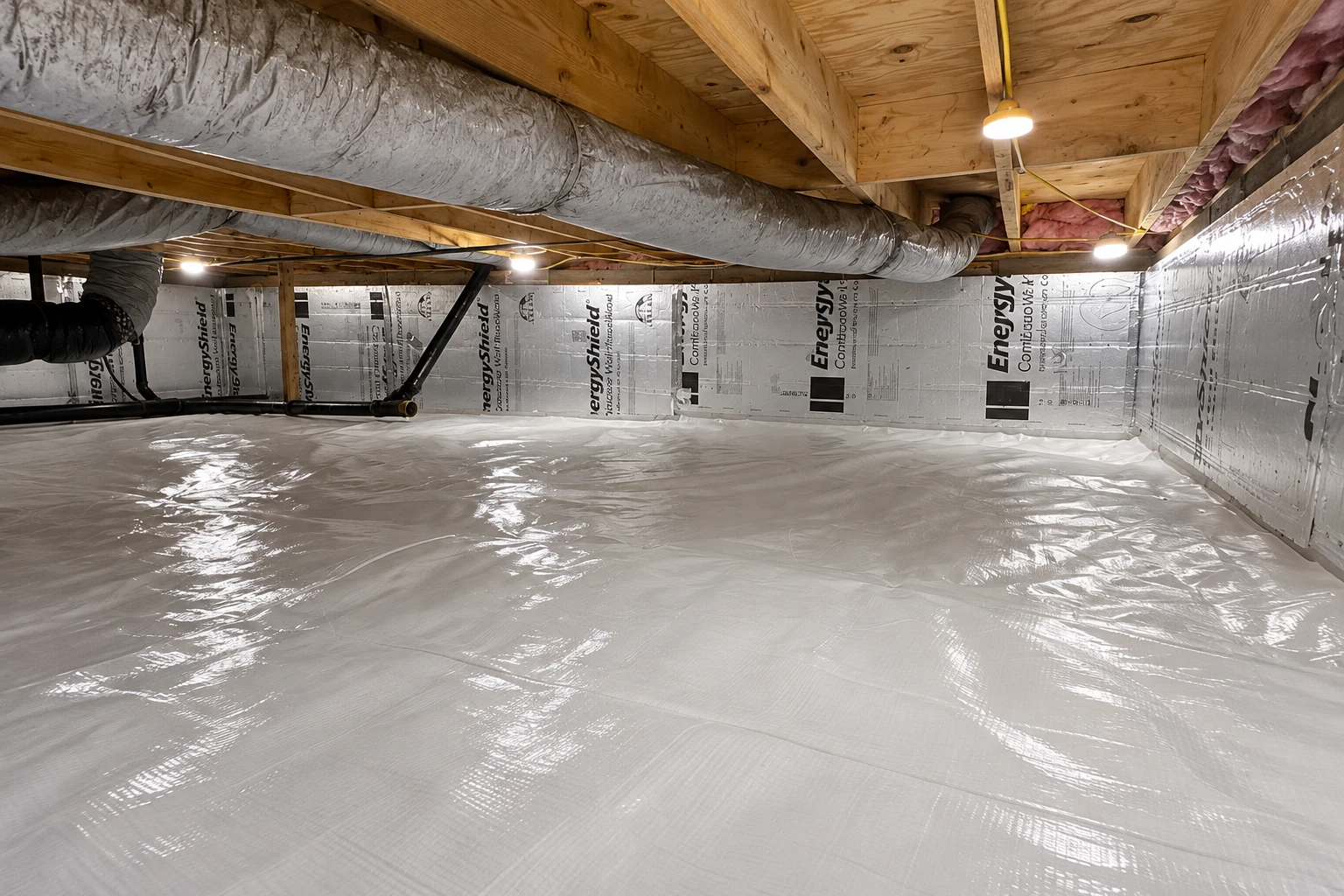
Vapor barrier installation in Tyler means covering the dirt floor of your crawl space with sealed plastic sheeting, so moisture from the ground stays under the plastic instead of rising into the wood that holds up your floors. The work itself usually goes quickly once the space is clear, and any wait usually comes from repairs that have to happen first.
Most calls start with a musty smell in the house, cold floors or a trip under the house that turned up bare dirt or a torn old sheet. I'll ask what you've noticed first, because that tells me where to look. The price mostly follows the size of the crawl space, how much room there is to work, how many piers need wrapping and whether standing water or rot has to be fixed before the plastic goes down, and the schedule usually waits on those same repairs. If the floors above still feel cold afterward, crawl space insulation may be worth a look, and I'll tell you if it isn't. At the estimate I show you what I found and explain your choices before you decide.
How our vapor barrier installation goes
We start by clearing out stored items and debris, because the plastic has to cover the whole floor to do its job, and a box left in the corner leaves a patch of bare dirt. Then we lay the sheeting across the ground, run it up the foundation walls and around each pier, and tape the seams, the same way you'd tape down a drop cloth so paint can't creep under the edges. If there's an old barrier, I'll show you what shape it's in and whether a new sealed layer over it makes sense before we cover anything.
A covered crawl space takes care of the ground, but your house also leaks air at the top, and air that escapes through the attic gets replaced by air pulled in from below. That's why attic air sealing often pairs well with this job. If the house still feels cold once the leaks are closed, retrofit insulation adds insulation to the house you already have.
Why Tyler homeowners call Elite Tyler Spray Foam Insulation for vapor barriers
I walk the crawl space first
I come out myself to look at the job and walk it with you, and our installers do the work, which I check with them before we pack up. You hear what's under your house from the person who answers for the finished job.
Trained keeping public buildings tight
I learned this trade on a municipal crew keeping public buildings comfortable and tight, and we've been in business since 2021. That's where I learned to explain why each step matters, and I'd rather tell you your crawl space is fine than sell you a job you don't need.
Licensed and insured on every job
We're licensed and insured, and that's the first thing worth asking anyone who'll be working under your floors. If something gets damaged down there, it shouldn't land on you.
Daytime work within Tyler's hours
Tyler doesn't allow construction near homes between 9 p.m. and 7 a.m. on weekdays, or between 6 p.m. and 7 a.m. on weekends, so we plan crawl space work inside those hours. That keeps the noise to the daytime for you and your neighbors.
What matters most on this job is dealing with water or rot before any plastic goes down. When you call (903) 508-0953 or send us a request, tell us about any standing water, mold or things stored under the house so I know what I'm walking into.
Get a free crawl space barrier estimate at your house
We reply to every call and message within one business day to set a time. Then I'll come out, show you what I found under the house and explain your choices before you decide. The estimate is free, with no pressure and no obligation.
Crawl space vapor barrier work
Questions before you book a vapor barrier
How much does a crawl space vapor barrier cost in Tyler?
Across the US, installing a vapor barrier in a crawl space usually runs about $1,200 to $4,000 per job, which is the going rate nationally and not a quote from us. Where yours lands depends on the things I look at under the house, and I'll give you a figure for your home once I've seen it.
Should my crawl space be vented or closed?
For humid climates, building scientists recommend a closed, insulated crawl space, because warm outdoor air coming in through the vents can condense on the cooler framing under your floors. A plastic ground cover belongs in either kind, so the real choice is whether a cover alone is enough or the space should be closed off too. Closing it costs more, so I'll show you how outside air is getting in before you weigh it.
How do I get my crawl space ready for a vapor barrier?
Get any standing water, mold, rotten wood or hazardous material dealt with first, because a new barrier laid over those problems just covers them up. Plan and budget for that repair as its own step, and the barrier goes in once it's done. If I find any of it on the walk-through, I'll show you what has to happen first.
Can a new vapor barrier go over the old one?
It can, and federal building guidance names a new polyethylene layer, a common plastic sheeting, laid over the old one and sealed at every seam and fastened to the walls and piers as the more durable fix. Whether it suits your crawl space depends on what's going on under that old sheet. Federal weatherization guidance also calls for sheeting at least 6 mil thick, so that's a fair thing to ask any contractor about.
What causes moisture in a crawl space?
In a vented crawl space, most of the moisture usually comes from water getting in from outside, through poor yard grading, missing drainage around the edge of the house or the way the yard gets watered. A barrier can't keep up with water running toward the foundation, so I walk the outside of the house too. If grading or drainage is the cause, it gets fixed before or alongside the barrier.
Does a crawl space vapor barrier need a permit in Tyler?
If the city asks for a permit on your job, we handle the filing and set up the inspections, and if it isn't clear whether yours needs one, we check with the city's office before we start. Tyler requires every permit and plan to be submitted electronically through the city's online permit system.
Other work that goes with a crawl space barrier
- Attic air sealing
Leaks in the attic quietly pull outside air in through the lower floors and crawl space, so sealing them before adding insulation keeps the new material from fighting a draft.
- Retrofit insulation
Older homes in East Texas often came with thin insulation, and adding more to the existing walls, floors and attic can fix cold rooms without a remodel.