
Basement insulation in Tyler TX - drier walls and less summer dampness downstairs
Musty smell, water marks or a cold floor downstairs? We fix the water first, then insulate with materials that hold up if they get wet.
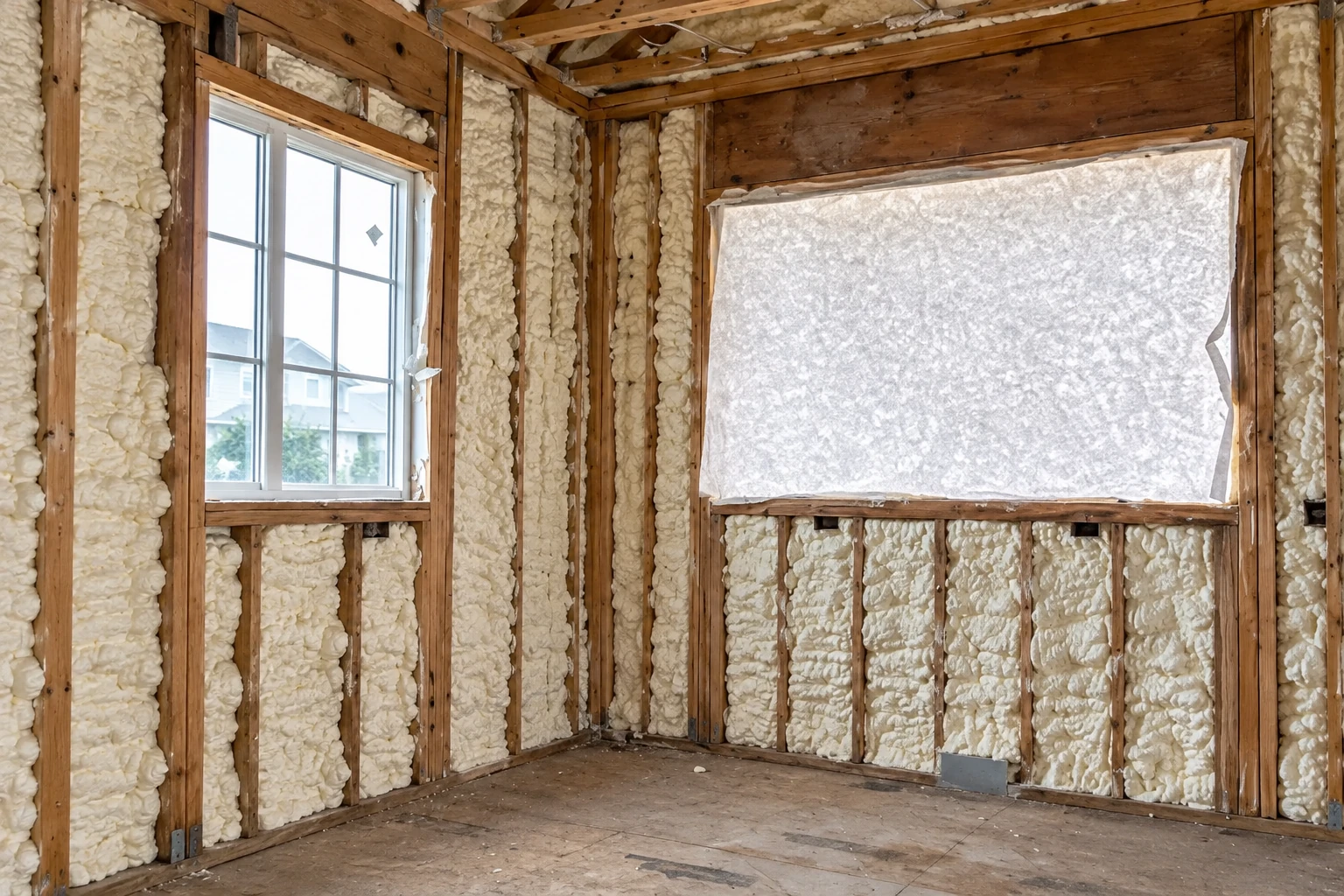
How should I insulate my basement in Tyler?
Basement insulation in Tyler covers your foundation walls and the rim joist, the wood band sitting on top of the concrete, so the air in the room stops meeting cold surfaces where moisture collects. When it's done in the right order, your basement feels warmer, smells fresher and stops working against the rest of the house.
Most people call us about a musty smell, a damp spot on the block or a floor that's cold underfoot, and the first thing I ask is what you've noticed and when. The price moves with how much wall there is, whether water has to be dealt with first, how uneven the walls and rim joist are, which material suits them and whether old, wet insulation has to come out through insulation removal. The schedule mostly turns on fixing any leak before we insulate and on whether the city wants a permit and inspection, and when I come out I show you what I found and explain your choices before you decide. If the city asks for a permit, we file it online through TylerInspections.com and set up the inspections, and if it isn't clear whether your job needs one, we check with the city before we start.
What our basement insulation work includes
Water comes first, so if a wall is damp we deal with that before anything covers it, the same way you'd fix a roof leak before you repaint the ceiling. Once the wall is dry, our crew does the air sealing, closing the gaps where outside air sneaks in so the insulation isn't fighting a draft. Then we insulate the rim joist and cover the foundation walls with a material that won't break down if the wall gets wet later. If we're spraying foam, I tell you before we start how long to keep the kids and pets out of the basement, and I check the work with our installers before we pack up and clean the space.
On most basement walls we land on closed-cell foam insulation, because it's dense enough to block moisture and it seals air while it insulates. Open-cell foam insulation is lighter and works well in attics and walls upstairs, but I keep it to dry spaces above ground rather than against a foundation wall.
Why Tyler homeowners call Elite Tyler Spray Foam Insulation for basement insulation
I walk the basement with you
I come out myself, ask what you've noticed and look the walls over with you before anyone talks about materials. If your insulation is already doing its job, I'll tell you so rather than sell you work you don't need.
Licensed and insured on every job
We're licensed and insured. Ask to see proof before we start, because any crew working in your house should be glad to show it.
Started in Tyler in 2021
I learned this trade on a municipal crew keeping public buildings comfortable and tight, then started this business in Tyler in 2021. That job taught me to explain why each step comes when it does, and I still work that way with homeowners.
Ask if your installer's registered
The City of Tyler has contractors register before they can apply for permits, so it's a fair question for anyone you're thinking of hiring. Ask us too, because a crew that isn't registered can't file a permit for your job.
On a basement, the order of the work matters more than anything else. Call (903) 508-0953 or send us a note about any leaks, water marks or musty smells you've seen, and I'll come take a look. Your satisfaction, guaranteed.
Get a free basement insulation estimate in Tyler
We reply within one business day to set a time for me to come out. I'll walk your basement with you, show you what I found and explain your choices, with no pressure and no obligation. If you've seen leaks, water marks or a musty smell, mention it in the form so I know where to look first.
What insulated basement walls look like
Questions before you insulate a basement
How much does it cost to insulate a basement in Tyler?
It depends on your basement, so I give you a figure after I've seen it rather than over the phone. Closed-cell foam costs more than rigid foam board, but it seals air while it insulates and fills uneven block and the rim joist in one pass, so on most basement walls I think it's worth it. In most basements foam also needs a cover that works as a fire barrier, which drywall usually provides, so ask what the local code calls for and whether it's in your figure.
Do I need to fix basement leaks before insulating the walls?
Yes, any water coming through the wall gets fixed first, by steering water away from the foundation and air sealing the gaps in the wall before insulation goes in. Insulating over a moisture problem can hide it, and sometimes it traps water in the wall and causes worse damage.
What is the best insulation for basement walls?
The best choice is a material that isn't water-sensitive, because cellulose, fiberglass and open-cell spray foam lose their effectiveness when they get wet, and cellulose generally isn't recommended right against the concrete. If fiberglass goes in a framed wall, plastic sheeting or foil-faced board should stay off the room side of it, since they can trap moisture inside the wall. Kraft-faced batts or latex paint on the drywall do that job instead.
What causes a musty smell in my basement in the summer?
Usually it's humidity, because a basement runs much cooler than the rest of the house in summer and that cooler air carries higher humidity, which can lead to mold and odors. Insulated walls usually keep the basement warmer, and so drier, through humid summer weather.
Should I insulate the rim joist in my basement?
Yes, and the material matters, because the inside of the rim joist is a cold surface in winter and insulating the basement walls makes it colder still. Fiberglass batts stuffed in there let indoor air pass through to that cold wood, which can lead to condensation and mold, so we use foam there instead.
Is foam insulation on the outside of my foundation a termite risk?
It can be in termite-prone areas, because foam on the outside of the foundation that touches the soil can give termites a hidden path into the walls. The first step is finding out whether local code officials accept outside foam at all, so on a Tyler job we check with the city's office before we plan it.
Related insulation services
- Closed-cell foam insulation
When a basement wall or rim joist needs insulation that shrugs off moisture and seals air in one pass, closed-cell foam is usually the material we reach for.
- Open-cell foam insulation
If the attic, the roofline or the walls upstairs need help too, open-cell foam fills cavities and stops drafts well in the dry spaces above ground.